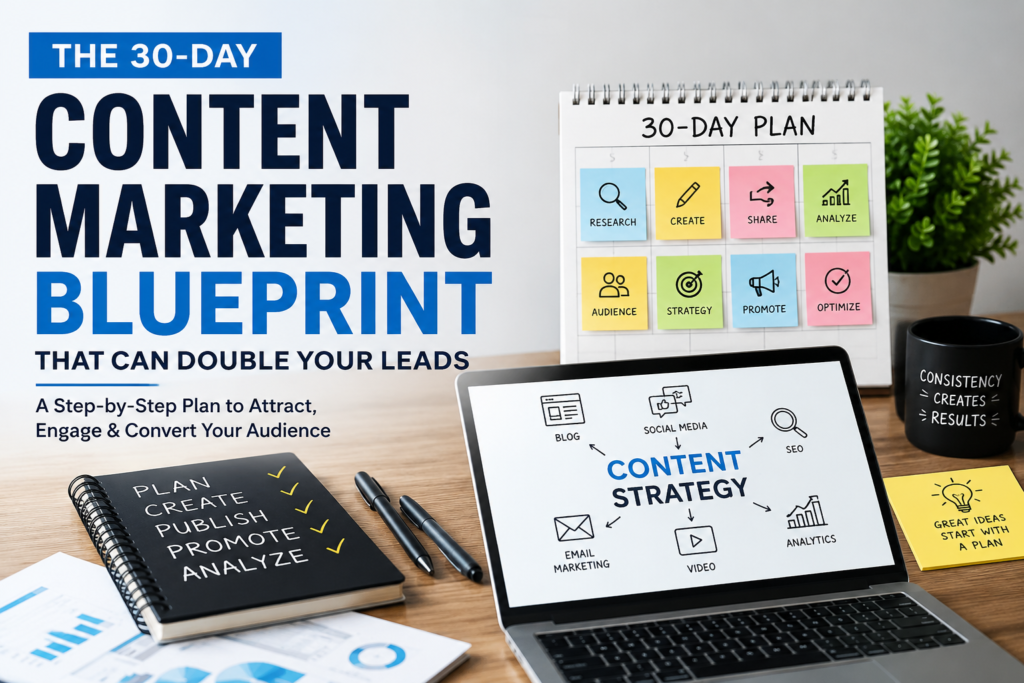
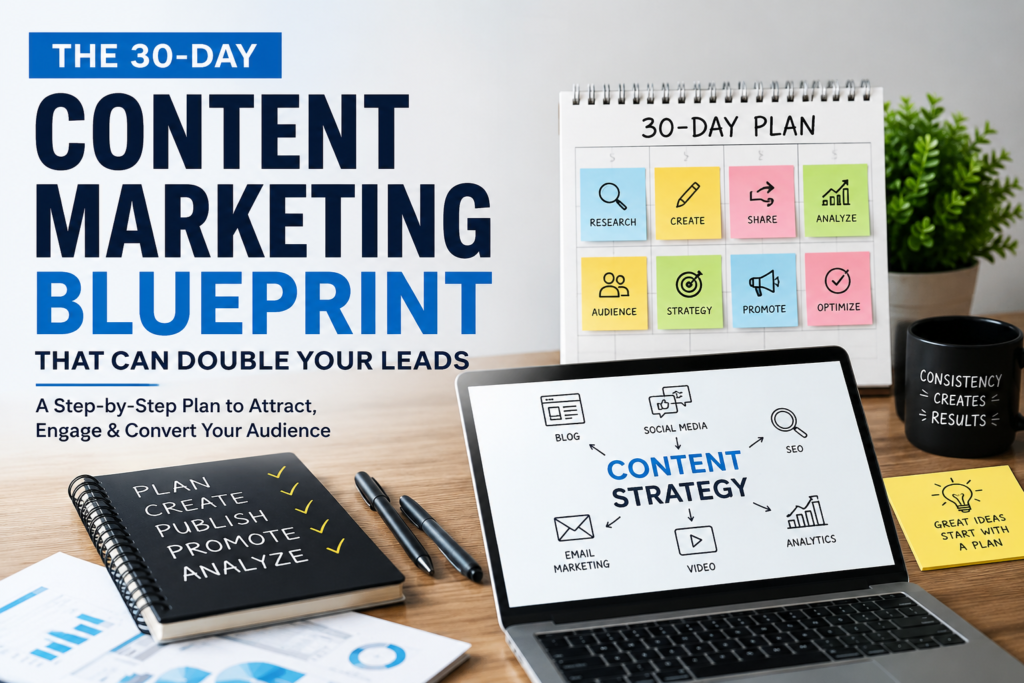
Introduction
Creating content consistently is one of the biggest challenges for businesses, creators, and marketers. Many people spend hours creating posts but struggle to generate meaningful engagement or quality leads. The problem isn’t the amount of content—it’s the lack of a clear strategy.
A well-planned content marketing blueprint helps you publish the right content for the right audience at the right time. Instead of posting randomly, you build a system that educates, inspires, and converts your audience into loyal customers.
This 30-day content marketing blueprint will help you create a sustainable strategy that increases brand awareness, improves engagement, and drives more leads for your business.
What Is a Content Marketing Blueprint?
A content marketing blueprint is a structured plan that outlines what content you will create, who it is for, where it will be published, and how it supports your business goals.
Rather than creating content based on guesswork, a blueprint helps you align every blog, video, social media post, and email with a specific objective.
Whether you’re a small business owner, freelancer, entrepreneur, or digital marketer, having a blueprint ensures consistency and measurable growth.
Why Content Marketing Matters
Content marketing is more than simply posting on social media. It is about delivering value that builds trust with your audience.
An effective content marketing strategy can help you:
- Increase website traffic
- Improve search engine rankings
- Build brand authority
- Generate qualified leads
- Strengthen customer relationships
- Increase conversions and sales
Businesses that consistently publish valuable content are more likely to attract organic traffic and establish long-term credibility in their industry.
Step 1: Define Your Goals
Before creating any content, decide what success looks like.
Your goals might include:
- Increasing website visitors
- Growing your Instagram or LinkedIn audience
- Generating leads
- Driving product sales
- Building a personal brand
- Improving customer engagement
Every piece of content should contribute to one or more of these goals.
Step 2: Understand Your Target Audience
The most successful content is written with a specific audience in mind.
Ask yourself:
- Who are they?
- What problems do they face?
- What questions do they search online?
- Which platforms do they use?
- What motivates them to take action?
When your content addresses real challenges, it becomes more valuable and more likely to be shared.
Step 3: Build Content Pillars
Content pillars are the main topics your brand focuses on. They create consistency and make content planning much easier.
For a digital marketing business, your pillars might include:
- SEO
- Social Media Marketing
- AI Tools
- Email Marketing
- Content Marketing
- Personal Branding
Each pillar can generate dozens of blog posts, videos, reels, and carousel ideas, ensuring you never run out of content.
Step 4: Create a 30-Day Content Calendar
Consistency is key to successful content marketing. Planning your content in advance helps you maintain a regular posting schedule.
A balanced monthly plan could include:
- Educational articles
- How-to guides
- Case studies
- Customer success stories
- Industry news
- Behind-the-scenes content
- FAQs
- Short-form videos
- Infographics
Repurpose each piece of content across multiple platforms to maximize its reach.
Step 5: Focus on SEO
Creating valuable content is only half the job. People also need to find it.
Search Engine Optimization (SEO) improves your visibility on search engines like Google.
To optimize your content:
- Use your primary keyword naturally throughout the article.
- Include descriptive headings.
- Write compelling meta titles and descriptions.
- Add internal and external links.
- Optimize images with alt text.
- Use short paragraphs and bullet points for better readability.
SEO ensures your content continues attracting visitors long after it’s published.
Step 6: Promote Your Content
Many marketers spend hours creating content but very little time promoting it.
After publishing your content:
- Share it on LinkedIn, Instagram, Facebook, and X.
- Include it in your email newsletter.
- Repurpose it into reels, carousels, and short videos.
- Answer relevant questions in online communities.
- Collaborate with creators and industry experts.
Promotion often has a greater impact than simply publishing more content.
Step 7: Measure Performance
Content marketing should always be guided by data.
Track metrics such as:
- Website traffic
- Organic search performance
- Engagement rate
- Time on page
- Conversion rate
- Leads generated
- Social shares
- Email sign-ups
Regular analysis helps you identify what works and improve future content.
Common Content Marketing Mistakes
Avoid these common mistakes that can limit your results:
- Publishing without a strategy
- Ignoring SEO best practices
- Creating content only for sales
- Posting inconsistently
- Not understanding your audience
- Failing to analyze performance
- Using clickbait headlines without delivering value
- Forgetting clear calls to action
Successful content marketing is built on consistency, relevance, and trust.
Quick 30-Day Content Marketing Plan
Week 1: Research your audience, define goals, and identify content pillars.
Week 2: Create a content calendar, write blog posts, and design supporting visuals.
Week 3: Publish content consistently, optimize for SEO, and share it across multiple channels.
Week 4: Review analytics, identify top-performing content, repurpose successful pieces, and refine your strategy for the next month.
Following this simple cycle each month creates a repeatable system for continuous growth.
Conclusion
Content marketing is not about producing the most content—it is about creating the right content with purpose and consistency. A structured 30-day blueprint helps you stay organized, build authority, improve search visibility, and generate quality leads over time.
By understanding your audience, focusing on SEO, planning content in advance, and measuring performance, you can create a sustainable marketing strategy that supports long-term business growth.
Start small, stay consistent, and remember that every valuable piece of content is an investment in your brand’s future.
Focus on consistency rather than volume. Publishing one or two high-quality pieces each week is often more effective than posting daily without a strategy.
How does SEO support content marketing?
SEO helps your content appear in search engine results, making it easier for your target audience to discover your website and increasing long-term organic traffic.
Can small businesses benefit from content marketing?
Absolutely. Even with a limited budget, small businesses can use valuable, consistent content to attract customers, build credibility, and compete with larger brands.