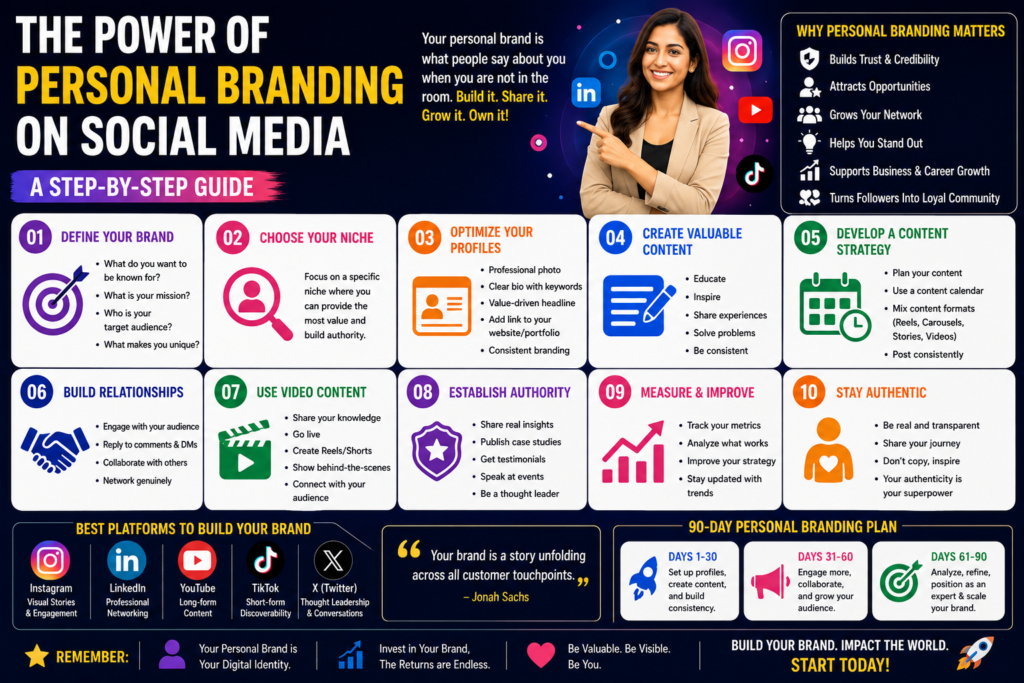
INTRODUCTION
In today’s digital-first world, people don’t just follow businesses—they follow people. Whether you’re an entrepreneur, freelancer, digital marketer, creator, or job seeker, your personal brand has become one of your most valuable assets.
Think about the most influential people on social media. They aren’t necessarily the biggest companies; they’re individuals who have built trust, shared their expertise, and created communities around their ideas.
In 2026, personal branding is no longer optional. It’s a powerful tool that can help you attract opportunities, grow your business, establish authority, and create a lasting impact.
This guide will walk you through the importance of personal branding and provide a step-by-step framework to build a strong presence on social media.
What Is Personal Branding?
Personal branding is the process of intentionally shaping how others perceive you online and offline.
Your personal brand includes:
- Your values
- Your expertise
- Your personality
- Your communication style
- Your online presence
Simply put, it’s what people think of when they hear your name.
For example:
- A fitness coach may be known for health tips.
- A digital marketer may be known for marketing insights.
- A baker may be recognized for creative cake designs.
- A motivational speaker may be associated with inspiration and leadership.
Your goal is to become memorable and valuable within your niche.
Why Personal Branding Matters in 2026
Personal branding offers numerous benefits:
- Builds credibility
- Creates trust
- Attracts opportunities
- Expands your network
- Supports career growth
- Helps generate leads and sales
- Differentiates you from competitors
People are more likely to buy from, work with, and recommend someone they know and trust.
The Rise of Social Media
Social media has transformed how people build their brands.
Popular platforms include:
- YouTube
- X
- TikTok
These platforms allow individuals to reach audiences around the world without significant investments.
A smartphone and a consistent strategy are often all you need to get started.
Step 1: Define Your Personal Brand
Before posting content, ask yourself:
- What do I want to be known for?
- Who is my target audience?
- What value can I provide?
- What makes me unique?
Example:
“I help small businesses grow through digital marketing strategies.”
A clear positioning statement makes your content more focused and effective.
Step 2: Choose Your Niche
Trying to appeal to everyone often leads to poor results.
Popular niches include:
- Digital Marketing
- Finance
- Fitness
- Technology
- Fashion
- Education
- Food
- Travel
Choosing a niche helps establish authority and attract the right audience.
Step 3: Optimize Your Profiles
Your social media profiles should clearly communicate who you are.
Include:
- Professional profile photo
- Compelling bio
- Relevant keywords
- Website or portfolio link
- Consistent branding
Example Bio:
Helping entrepreneurs grow online | Digital Marketing Trainer | New Tips Every Day
Consistency across platforms improves recognition.
Step 4: Create Valuable Content
Content is the foundation of personal branding.
Share:
- Educational posts
- Personal stories
- Industry insights
- Behind-the-scenes content
- Tutorials
- Case studies
A useful framework is:
- 60% Educational
- 20% Personal
- 20% Promotional
Remember: People follow accounts that consistently provide value.
Step 5: Develop a Content Strategy
Consistency is more important than perfection.
Suggested weekly schedule:
| Day | Content Type |
|---|---|
| Monday | Industry Tips |
| Tuesday | Personal Story |
| Wednesday | Carousel Post |
| Thursday | Reel or Video |
| Friday | Case Study |
| Saturday | Behind-the-Scenes |
| Sunday | Community Engagement |
Planning content in advance helps maintain momentum.
Step 6: Build Relationships
Social media is not a one-way communication channel.
Spend time:
- Replying to comments
- Answering messages
- Supporting other creators
- Participating in discussions
Building genuine relationships strengthens your personal brand and increases visibility.
Step 7: Use Video Content
Video continues to dominate social media.
Popular formats include:
- Reels
- YouTube Shorts
- Live sessions
- Tutorials
- Q&A videos
Video helps audiences connect with your personality and build trust more quickly.
Step 8: Establish Authority
Authority comes from consistently demonstrating expertise.
Ways to build authority include:
- Publishing blogs
- Speaking at events
- Sharing testimonials
- Creating case studies
- Collaborating with experts
Over time, people will begin to associate your name with your area of expertise.
Step 9: Monitor Your Growth
Track metrics such as:
- Follower growth
- Engagement rate
- Reach
- Website traffic
- Leads generated
Analyzing performance helps identify what resonates with your audience.
Step 10: Stay Authentic
Authenticity is one of the most important aspects of personal branding.
Avoid:
- Copying others
- Pretending to be someone you’re not
- Chasing every trend
People connect with authenticity, not perfection.
Share your:
- Successes
- Challenges
- Lessons learned
- Experiences
Authentic brands are more memorable and relatable.
Common Personal Branding Mistakes
Avoid these common mistakes:
- Posting inconsistently
- Ignoring audience engagement
- Lacking a clear niche
- Focusing solely on selling
- Inconsistent visual identity
Personal branding is a marathon, not a sprint.
Emerging Trends in Personal Branding
AI-Assisted Content Creation
AI tools can help with:
- Caption writing
- Graphic design
- Video editing
- Content planning
Community Building
Creators are increasingly focusing on building communities rather than simply growing follower counts.
Short-Form Video
Short-form content remains one of the most effective ways to increase visibility.
Thought Leadership
Audiences value insights, opinions, and expertise.
Positioning yourself as a thought leader can significantly enhance your personal brand.
A 90-Day Personal Branding Plan
Month 1
- Define your niche.
- Optimize profiles.
- Publish consistently.
Month 2
- Experiment with video content.
- Engage with your audience.
- Collaborate with others.
Month 3
- Analyze performance.
- Refine your strategy.
- Launch a newsletter or blog.
By the end of 90 days, you’ll have established a strong foundation for long-term growth.
CONCLUSION
The power of personal branding on social media cannot be overstated. In 2026, your online presence often serves as your first impression, resume, and portfolio all at once.
Whether your goal is to grow a business, attract clients, advance your career, or build a community, personal branding provides a pathway to achieve it.
Remember, every influential creator and entrepreneur started with zero followers. What set them apart was consistency, authenticity, and a commitment to providing value.
Start today. Define your niche, share your story, and show the world what makes you unique.
Your personal brand isn’t just about being seen—it’s about bein