INTRODUCTION
Digital marketing is one of the fastest-growing and most rewarding career fields in the world today. As businesses continue to shift online, the demand for skilled digital marketers has reached an all-time high. Whether you’re a student, a recent graduate, a working professional looking for a career change, or an entrepreneur wanting to grow your own brand, digital marketing offers endless opportunities.
The best part? You don’t need a specific degree, years of experience, or a huge investment to get started.
In this comprehensive guide, you’ll learn how to start a career in digital marketing in 2026, the skills you need to develop, the various career paths available, and practical steps to land your first job.
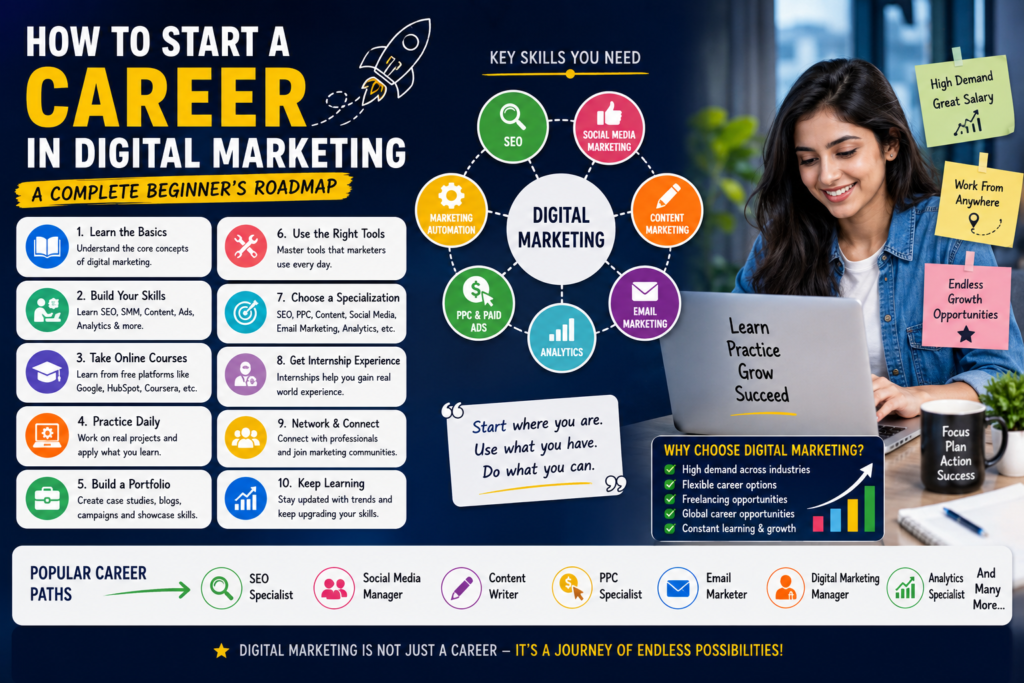
Why Choose Digital Marketing as a Career?
Digital marketing is no longer just an optional business function—it’s essential. Every company, from startups to multinational corporations, relies on digital channels to reach customers.
Here are a few reasons why digital marketing is an excellent career choice:
- High demand across industries
- Competitive salaries
- Remote and freelance opportunities
- Flexible career paths
- Continuous learning and growth
- Ability to work globally
- Low barrier to entry
With AI, automation, and social media reshaping the industry, digital marketing professionals are expected to remain in demand for years to come.
What Is Digital Marketing?
Digital marketing refers to promoting products, services, or brands through online channels such as:
- Search engines (SEO and SEM)
- Social media platforms
- Email marketing
- Content marketing
- Influencer marketing
- Affiliate marketing
- Video marketing
- Paid advertising
Digital marketers use these channels to increase brand awareness, generate leads, drive sales, and build customer relationships.
Step 1: Understand the Core Areas of Digital Marketing
Before choosing a specialization, it’s important to understand the major components of digital marketing.
Search Engine Optimization (SEO)
SEO focuses on improving a website’s visibility on search engines like Google.
Social Media Marketing (SMM)
Managing and growing brands on platforms such as Instagram, LinkedIn, Facebook, and YouTube.
Performance Marketing
Running paid campaigns using:
- Google Ads
- Meta Ads
- LinkedIn Ads
- YouTube Ads
Content Marketing
Creating:
- Blogs
- Videos
- Podcasts
- Newsletters
- Case studies
Email Marketing
Building relationships with customers through personalized email campaigns.
Marketing Automation
Using tools to automate workflows, lead nurturing, and customer communication.
Step 2: Learn Essential Digital Marketing Skills
Successful digital marketers possess both technical and soft skills.
Technical Skills
- SEO
- Google Ads
- Meta Ads
- Google Analytics
- Canva
- WordPress
- AI tools
- Email marketing
- Copywriting
- Video editing
Soft Skills
- Communication
- Creativity
- Problem-solving
- Time management
- Analytical thinking
- Adaptability
The more skills you develop, the more valuable you’ll become in the job market.
Step 3: Take Free Online Courses
Fortunately, you can learn digital marketing for free.
Popular platforms include:
- Google Digital Garage
- HubSpot Academy
- Coursera
- LinkedIn Learning
- Meta Blueprint
- Google Skillshop
Start with foundational courses and gradually move toward advanced topics.
Step 4: Build Your Personal Brand
One of the best ways to stand out is to market yourself.
Create:
- A LinkedIn profile
- An Instagram page
- A portfolio website
- A personal blog
- A YouTube channel
Share:
- Marketing tips
- Case studies
- Industry insights
- Campaign ideas
- Learning experiences
Employers are more likely to hire candidates who demonstrate practical knowledge online.
Step 5: Learn Popular Tools
Digital marketers use dozens of tools every day.
Some must-learn tools include:
- ChatGPT
- Canva
- Google Analytics
- SEMrush
- Ahrefs
- Notion
- Mailchimp
- HubSpot
- CapCut
- WordPress
Becoming proficient with these tools will give you a competitive advantage.
Step 6: Practice Through Real Projects
Learning theory is important, but practical experience is what gets you hired.
Try:
- Creating a blog
- Running a small ad campaign
- Managing an Instagram account
- Building a website
- Conducting SEO audits
- Writing marketing emails
Document your results and add them to your portfolio.
For example, if you grow an Instagram page from 0 to 5,000 followers, that’s valuable experience you can showcase during interviews.
Step 7: Choose a Specialization
Digital marketing is a broad field.
Popular career paths include:
| Role | Average Responsibilities |
|---|---|
| SEO Specialist | Improve website rankings |
| Social Media Manager | Manage social platforms |
| Content Writer | Create blogs and website content |
| PPC Specialist | Run paid advertising campaigns |
| Email Marketer | Build and manage email campaigns |
| Marketing Analyst | Analyze campaign performance |
| Influencer Manager | Handle influencer partnerships |
| Digital Marketing Manager | Lead marketing teams |
Choosing one specialization initially can help you build expertise faster.
Step 8: Build a Strong Portfolio
Your portfolio should include:
- Blog samples
- Social media campaigns
- Ad creatives
- SEO reports
- Analytics dashboards
- Case studies
Remember, employers care more about results than certificates.
A simple portfolio website can significantly improve your chances of getting hired.
Step 9: Apply for Internships and Entry-Level Jobs
Once you’ve built your skills, start applying for:
- Digital Marketing Intern
- SEO Executive
- Social Media Executive
- Content Writer
- PPC Executive
- Marketing Coordinator
Internships are an excellent way to gain real-world experience.
Don’t wait until you feel “ready.” Apply while continuing to learn.
Step 10: Stay Updated With Industry Trends
Digital marketing changes rapidly.
Follow:
- Marketing blogs
- Industry leaders
- Podcasts
- LinkedIn creators
- YouTube channels
Keep learning about:
- Artificial Intelligence
- Voice Search
- Marketing Automation
- Personalization
- Short-form Video Content
Professionals who continuously learn are the ones who succeed in the long run.
Common Mistakes to Avoid
Many beginners make these mistakes:
- Trying to learn everything at once
- Ignoring practical experience
- Avoiding networking
- Not building a portfolio
- Focusing only on certificates
- Giving up too early
Remember, consistency is more important than perfection.
Salary Expectations in 2026
Although salaries vary by location and experience, here is a general estimate:
- Intern: ₹10,000–₹20,000/month
- Executive: ₹25,000–₹50,000/month
- Specialist: ₹50,000–₹1,00,000/month
- Manager: ₹1,00,000+/month
- Freelancer: Depends on clients and projects
As your expertise grows, so does your earning potential.
CONCLUSION
Starting a career in digital marketing in 2026 has never been easier. With free learning resources, AI-powered tools, and countless opportunities across industries, anyone with dedication and curiosity can build a successful career in this field.
Begin by learning the fundamentals, practice consistently, build your personal brand, and create a portfolio that showcases your skills. Over time, you’ll develop the confidence and experience needed to land your dream role.
Digital marketing is more than just a job—it’s a career that rewards creativity, adaptability, and lifelong learning.
The journey may start with a single online course, but it can lead to a future filled with exciting opportunities, financial growth, and professional success.
The best time to start your digital marketing career is today.